LAM welcomes Indhira García Belda, PHD Student at Universidad Loyola (Campus Sevilla)
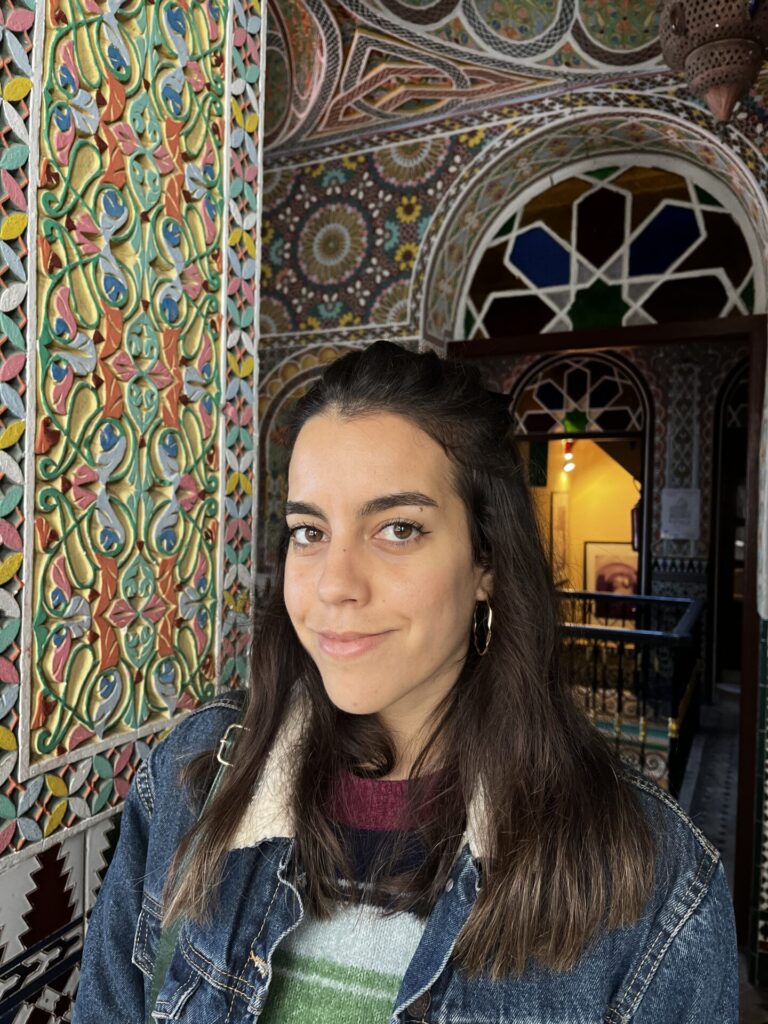
Indhira García Belda is invited at LAM from 4th September 2025 to 15th January 2026.
She will be working on the following subject: « Africa-Europa: Is Security the New Normal? »
What is the context of your visit ?
I am currently conducting a research stay at Les Afriques dans le Monde laboratory in Sciences Po Bordeaux as part of my doctoral training program. I am pursuing a PhD in International Relations and my research has primarily focused on Spain’s bilateral relations with West African countries in the context of migration policies. However, my time at Sciences Po is helping me broaden my scope and explore other areas of investigation within the field of European foreign policy toward West Africa.
Where does this interest in your research come from? Can you tell us a little about your background?
I was born and raised in the Canary Islands, an archipelago off the coast of Western Sahara and Morocco that belongs to Spain. In 2006 there was an unprecedented number of arrivals of African migrants, along with the rise of deaths during the Atlantic crossing. I was a child at the time and I remember seeing news reports of African people reaching our shores in fishing boats. Politicians began speaking of a “crisis of migration” and the media echoed this discourse by repeatedly showing images that portrayed Africans as poor and desperate. This whole migration narrative was constantly reproduced and so it quickly became normalized. Yet as a child, I could not understand why African people were not allowed to migrate or visit as tourists just like Europeans had always done. As I grew older, this question stayed with me and I knew that if I wanted to fully understand the logic behind the complex migration system I needed to look deeper into it.
I wanted to grasp the broader picture: the policies and how they played out in everyday life, particularly in the Canary Islands. I worked in different migration programs, and at one point I combined one of these jobs with my second master’s degree. I spent my mornings as a social integrator in a humanitarian aid program, and my afternoons writing my thesis on the security-driven logic of the Spanish government toward African migration. Both experiences informed each other, giving me the tools to better understand migration governance.
What topics do your research generally focus on? More specifically, what main research questions/issues are you working on ?
My investigation has primarily been centered on migration, specifically West African migration to the Canary Islands. I have approached this topic through critical theories that examine how legitimate discourses are powerful enough to shape narratives and manage migration by constructing African citizens as a threat to Europe. Western actors have put into force the « security – development nexus », which implies that there can be no security without development and no development without security. This nexus is Europe’s foreign policy axis and is used to justify interventions across the African continent.
At the initial stage of my research, I was interested in exploring whether Western critical theories of security and African critical theories (afropessimism and necropolitics) could interact to provide a meaningful analysis of Spain’s migration policies with regard to Africa. However, I am currently broadening the scope of my research topic, focusing more on Europe as an actor rather than Spain, and on other issues within the field of foreign policy, always in relation to the African continent.
What challenges do you expect to face, or are you facing, and how do you plan to overcome them ?
This is the first time that I am fully dedicated to research since my previous research experiences were always combined with my work in the migration programs I mentioned earlier. I have noticed that in academia, there are many theories and project proposals, but having a sense of how policies are implemented in real life makes it clear that many of these good-intentioned ideas are not always feasible. As scholars we need to engage with society and politics, to take part in uncomfortable conversations and tasks beyond relying on theoretical knowledge. We should be aiming to bridge academia and society, so that the knowledge we produce emerges from real-world contexts and contributes to the common good, rather than just aiming for publications in major journals. While sharing knowledge is important, we also need to find better ways to make research truly accessible.
What advice would you give other LAM visitors ?
To participate in as many LAM activities as possible. There are significant differences between research practices in Spain and France, and by attending different seminars, having conversations with other PhD students, listening to them present their work and using the available resources (library, online access to publications, blogs, etc.) I am becoming familiar with new fields of knowledge and methodologies, as well as it has opened the path for me to further develop and explore additional lines of research.
